· Hugo · Customizing · 8 min read
Microshift Vs Shimano (Detailed Comparison)
With so many brands manufacturing cycling components today, choosing the right derailleurs, shifters, and drivetrain parts for your bike can be challenging.
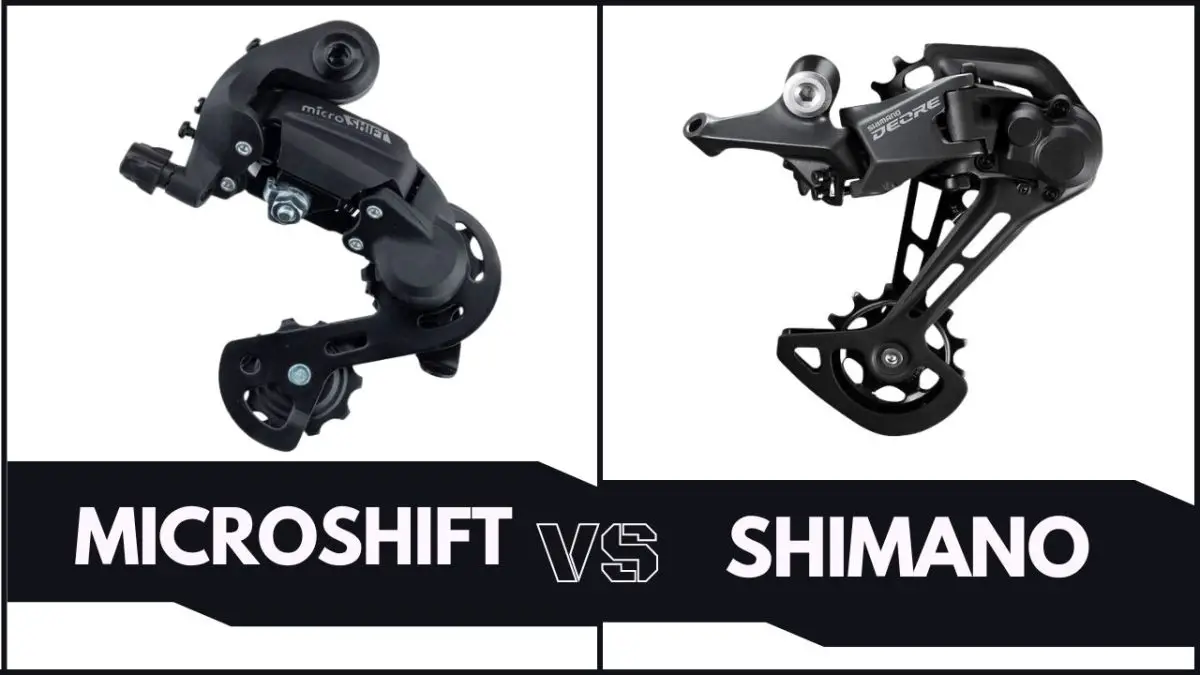
With so many brands manufacturing cycling components today, choosing the right derailleurs, shifters, and drivetrain parts for your bike can be challenging.
Two of the biggest players that you’ll likely encounter are Microshift and Shimano.
Shimano has long been the undisputed leader in the bike component world, known for its engineering innovation and premium performance.
But Microshift has rapidly been making a name for itself in recent years, producing components that rival Shimano’s smoothness and quality at a fraction of the price.
So how do Microshift vs Shimano compare?
In this post, we’ll evaluate some of the key differences between these two component giants.
We’ll look at criteria like price, durability, performance, weight, availability, and compatibility to help you determine which brand is the better choice for your cycling needs and budget.
Shimano Vs Microshift
| Factor | Microshift | Shimano |
|---|---|---|
| Price | More affordable, lower cost components | Typically more expensive, higher cost |
| Quality | Impressive for the price, durable materials | Top-tier models offer premium construction |
| Performance | Very good, smooth and accurate shifting | Excellent, ultra-smooth and precise |
| Weight | On par with Shimano for most components | Lighter for high-end carbon offerings |
| Availability | Growing distribution channels | Widely available both online and in shops |
| Compatibility | Works great with Shimano drivetrains | Broad compatibility across bikes |
Here’s a detailed comparison of Microshift vs Shimano on some of these factors:
Price And Value
The most obvious difference between Microshift and Shimano is price.
Broadly speaking, Shimano components are more expensive.
For example, a Shimano 105 11-speed rear derailleur costs around $60, while a comparable Microshift R11 rear derailleur is priced at about $25.

Detailed Price Comparison Table
Here’s a breakdown of current pricing for comparable components:
| Component | Microshift Model | Microshift Price | Shimano Model | Shimano Price | Savings |
|---|---|---|---|---|---|
| Rear Derailleur (11-speed) | R11 | $25-30 | 105 R7000 | $60-70 | $35-40 |
| Rear Derailleur (10-speed) | R10 | $20-25 | Tiagra 4700 | $45-55 | $25-30 |
| Mountain Rear Derailleur (1x11) | Advent X | $35-40 | Deore M5100 | $50-60 | $15-20 |
| Mountain Rear Derailleur (1x10) | Advent | $25-30 | Deore M4100 | $40-50 | $15-20 |
| Shifter Set (11-speed) | R11 | $50-60 | 105 R7000 | $120-140 | $70-80 |
| Shifter Set (10-speed) | R10 | $40-50 | Tiagra 4700 | $90-110 | $50-60 |
| Cassette (11-speed) | R11 | $30-40 | 105 R7000 | $50-70 | $20-30 |
Prices are approximate and may vary by retailer and region. Microshift typically offers 40-60% savings compared to equivalent Shimano components.
However, the extra cost doesn’t always mean extra performance or quality with Shimano.
Microshift punches well above its weight class, providing impressive quality and smooth shifting for a fraction of the price of many Shimano components.
For budget-minded builds or upgrades, Microshift offers incredible value.
Durability
Shimano components are known for their durability and longevity.
They are designed to withstand heavy use and can last for years with proper maintenance.
Microshift components, while not as durable as Shimano, still offer decent quality and are built to withstand regular use.
However, they may not last as long as Shimano components, especially for more serious cyclists who put a lot of miles on their bikes.
Quality
Both brands produce components using aluminum, steel, and carbon fiber. And the materials used are largely the same grade.
In general, Shimano and Microshift have similar quality construction at most mid-range price points.
For example, an entry-level Claris rear derailleur from Shimano versus a similar Advent model from Microshift will offer comparable durability and smoothness during regular cycling.
At the highest levels, Shimano’s carbon offerings are crafted with more sophisticated molds and exotic alloys, giving them the edge in weight and rigidity.
But for average cycling needs, Microshift delivers without the costly premium.
Performance and Smoothness
Shimano components are widely regarded as some of the best in the industry in terms of performance.
They offer smooth shifting, precise control, and excellent power transfer. It’s their advanced engineering that gives it an advantage in shifting consistency and control.
For example, features like Shimano’s Shadow Plus clutch design, optimized pivot placements, and Hyperglide cog tooth profiles enable superb responsiveness between shifter and derailleur.
Microshift components, while not quite on par with Shimano, still offer good performance and have dramatically closed the gap.
Models like Advent and Arsis now mimic many of Shimano’s signature tech innovations.
Weight
In the high-performance realm, Shimano dominates with featherweight carbon derailleurs, cassettes, and shifters. Their top-end groups like Dura-Ace Di2 are engineered with weight reduction as a priority.
At more modest price points though, Shimano and Microshift components have similar weights as they utilize comparable aluminum alloys and steel grades.
A Shimano Tiagra derailleur weighs just about the same as a Microshift Advent model of the same size and tooth capacity.

So for racers and weight weenies, Shimano has the upper hand.
But for the average rider, Microshift and Shimano weights are largely on par when comparing models of the same speed and materials.
Installation Difficulty
Both Microshift and Shimano components follow similar installation procedures, but there are some differences:
Microshift Installation:
- Generally straightforward installation process
- Compatible with Shimano cable pull ratios, making it easy to mix components
- May require slight adjustments to cable tension for optimal shifting
- Installation time: 30-60 minutes for a complete drivetrain setup
Shimano Installation:
- Well-documented installation procedures with extensive online resources
- OEM spec on most bikes means mechanics are very familiar with installation
- Precise cable tension is critical for optimal performance
- Installation time: 30-60 minutes for a complete drivetrain setup
Verdict: Installation difficulty is similar for both brands. Shimano has more resources and familiarity, but Microshift’s compatibility with Shimano standards makes it equally accessible.
Maintenance Requirements
Both brands require similar maintenance, but there are subtle differences:
| Maintenance Task | Microshift | Shimano |
|---|---|---|
| Cable Replacement | Every 1,000-2,000 miles | Every 1,000-2,000 miles |
| Derailleur Cleaning | Monthly or after muddy rides | Monthly or after muddy rides |
| Lubrication | Standard bike lube on pivots | Standard bike lube on pivots |
| Limit Screw Adjustment | As needed (similar to Shimano) | As needed |
| Cable Tension Adjustment | May need more frequent fine-tuning | Generally holds adjustment longer |
| Replacement Parts Availability | Growing but less common | Widely available everywhere |
Key Difference: Shimano components may hold adjustments slightly longer due to more refined manufacturing tolerances, but both require similar maintenance schedules.
Warranty and Customer Support
Shimano Warranty:
- Standard 2-year warranty on most components
- Excellent customer support network
- Authorized service centers worldwide
- Easy warranty claim process through retailers
- Replacement parts readily available
Microshift Warranty:
- Typically 1-2 year warranty depending on component
- Growing customer support network
- Warranty claims processed through authorized dealers
- Replacement parts becoming more accessible
- Responsive customer service via email
Verdict: Shimano has the advantage in warranty support due to its established network, but Microshift’s warranty coverage is competitive and customer service is improving.
Availability
Thanks to its decades of OEM spec and aftermarket popularity, Shimano components are widely available both online and at most local bike shops.
Replacement parts, accessories, and service knowledge are super easy to find.
Microshift is less ubiquitous, but has vastly expanded its worldwide distribution network in recent years.
Major online retailers like Wiggle, Chain Reaction Cycles, and Merlin carry Microshift groups.
Compatibility
One of the biggest advantages of Shimano components is their compatibility with a wide range of other components.
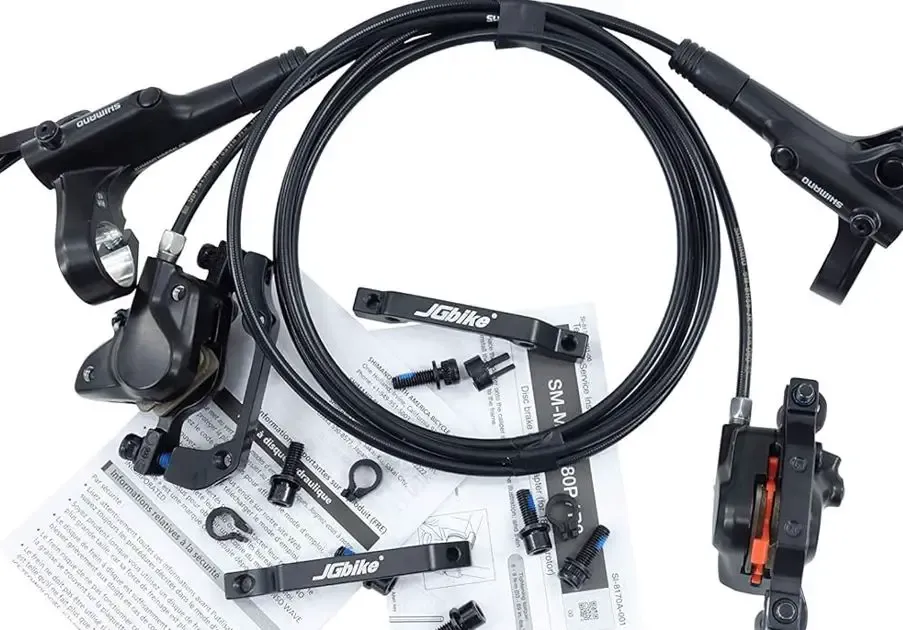
This makes it easy for cyclists to mix and match different parts to create their ideal setup.
Microshift components, while compatible with most other components, may not be as versatile as Shimano.
This can limit the options available to cyclists who want to customize their bikes.
Specific Product Model Comparisons
Microshift Advent X vs Shimano Deore M5100
Both are 1x11 mountain bike drivetrains designed for trail and enduro riding.
| Feature | Microshift Advent X | Shimano Deore M5100 |
|---|---|---|
| Gear Range | 11-48T cassette | 11-51T cassette |
| Weight (Cassette) | ~550g | ~560g |
| Weight (Derailleur) | ~280g | ~300g |
| Price (Complete) | $120-150 | $180-220 |
| Clutch Mechanism | Yes | Shadow RD+ |
| Shifting Performance | Very good | Excellent |
| Durability | Good | Excellent |
| Best For | Budget builds, entry-level | Serious trail riders |
Verdict: Deore offers slightly better gear range and proven durability, but Advent X provides 90% of the performance at 60% of the cost.
Microshift R11 vs Shimano 105 R7000
Both are 11-speed road groupsets targeting the same market segment.
| Feature | Microshift R11 | Shimano 105 R7000 |
|---|---|---|
| Gear Options | 2x11 (50/34, 52/36) | 2x11 (50/34, 52/36, 53/39) |
| Cassette Range | 11-28T, 11-32T | 11-25T to 11-34T |
| Weight (Groupset) | ~2,400g | ~2,300g |
| Price (Complete) | $300-400 | $600-800 |
| Shifting Feel | Smooth, slightly less refined | Ultra-smooth, precise |
| Brake Performance | Good | Excellent |
| Best For | Budget road builds | Performance road cycling |
Verdict: 105 offers superior shifting refinement and brake performance, but R11 delivers solid performance for recreational and training use at half the price.
Microshift Advent vs Shimano Deore M4100
Entry-level 1x10 mountain bike drivetrains.
| Feature | Microshift Advent | Shimano Deore M4100 |
|---|---|---|
| Gear Range | 11-42T cassette | 11-42T cassette |
| Weight | Similar | Similar |
| Price | $80-100 | $120-150 |
| Shifting | Good | Very good |
| Durability | Good for casual use | Excellent for all conditions |
| Best For | Budget builds, casual riders | Entry-level serious riders |
Verdict: Both are excellent entry-level options. Advent offers better value, while Deore provides slightly better shifting and proven long-term durability.
Real-World Use Case Scenarios
Scenario 1: Budget Bike Build
Situation: Building a commuter/gravel bike on a tight budget ($500-800 total build)
Recommendation: Microshift Advent or R10
- Saves $100-200 on drivetrain components
- Performance is more than adequate for commuting and casual riding
- Money saved can be invested in better wheels or frame
When to Choose Shimano: If you plan to upgrade later or want maximum reliability for daily commuting.
Scenario 2: Upgrading an Older Bike
Situation: Upgrading a 10-year-old bike with worn drivetrain
Recommendation: Microshift R10 or R11
- Compatible with existing Shimano-compatible parts
- Significant cost savings allows for other upgrades (brakes, wheels)
- Easy installation with existing cable routing
When to Choose Shimano: If you want OEM-level quality and don’t mind the extra cost.
Scenario 3: Racing or High-Performance Riding
Situation: Competitive cycling, racing, or high-mileage training
Recommendation: Shimano 105, Ultegra, or Dura-Ace
- Superior shifting precision under load
- Better brake performance for descents
- Proven reliability in race conditions
- Lighter weight at higher tiers
When Microshift Works: For training bikes or secondary bikes where cost matters more than absolute performance.
Scenario 4: Mountain Bike Trail Riding
Situation: Regular trail riding, occasional enduro events
Recommendation:
- Budget-conscious: Microshift Advent X
- Performance-focused: Shimano Deore M5100 or SLX
Consideration: If you ride 2-3 times per week on moderate trails, Advent X is sufficient. For aggressive riding or racing, Deore/SLX offers better performance and durability.
Verdict
IMHO Microshift provides incredible value, punching well above its class with impressive component performance at budget-friendly prices.
Racers and enthusiasts seeking the absolute pinnacle in lightweight performance and silky smooth shifting may still prefer Shimano’s top-tier offerings.
But for everyone else, Microshift delivers quality durability and function at a fraction of the cost. Component for component, Microshift offers better value for most cyclists.
Frequently Asked Questions
Microshift Advent vs Shimano Deore
Shimano Deore is better than the Microshift Advent drivetrain. The Microshift Advent does not offer any weight savings, gear range, shifting, or cost advantages over the Shimano Deore 1x11 drivetrain. For example, the Advent X cassette is nearly the same weight as the Deore cassette despite claims of it being much lighter. And it also has a smaller gear range, unknown long-term durability, and is more expensive than the full Deore groupset.
Are Microshift components compatible with Shimano?
Yes, Microshift components are designed to be compatible with Shimano drivetrains. They use the same cable pull ratios, which means you can mix Microshift derailleurs with Shimano shifters, or vice versa. However, for optimal performance, it's best to use matching components from the same brand within a groupset.
How long do Microshift components last?
Microshift components typically last 2,000-5,000 miles with proper maintenance, which is comparable to entry-level Shimano components. High-end Shimano components (105, Ultegra, Dura-Ace) may last longer (5,000-10,000+ miles) due to better materials and manufacturing tolerances. Regular cleaning, lubrication, and cable replacement will extend the life of any drivetrain.
Is Microshift good for mountain biking?
Yes, Microshift is good for mountain biking, especially for budget builds and casual trail riding. The Advent and Advent X groupsets offer solid performance for most trail conditions. However, for aggressive enduro or downhill riding, Shimano Deore, SLX, or XT offer better durability and shifting performance under extreme conditions.
Can I upgrade from Microshift to Shimano later?
Yes, you can upgrade from Microshift to Shimano later. Since they use compatible cable pull ratios, you can often swap components without changing everything. However, you may need to adjust cable routing and ensure compatibility between shifters and derailleurs. It's often easier to upgrade the entire groupset at once.
Which is better for a beginner: Microshift or Shimano?
For beginners, Microshift offers better value. The performance difference is minimal for casual riding, and the cost savings allow beginners to invest in other important components like a good helmet, proper bike fit, or quality tires. As skills and riding intensity increase, upgrading to Shimano becomes more worthwhile.
Do professional cyclists use Microshift?
No, professional cyclists typically use Shimano, SRAM, or Campagnolo groupsets. These brands sponsor professional teams and provide the highest levels of performance, weight savings, and reliability required for competitive racing. Microshift is primarily used by recreational cyclists, commuters, and budget-conscious riders.
How do I choose between Microshift and Shimano?
Choose Microshift if: you're on a budget, building a commuter or casual trail bike, or want to save money for other upgrades. Choose Shimano if: you're racing or competing, ride aggressively, want maximum reliability, or prefer established brand reputation and support networks.