
· Hugo · Bikes · 3 min read
How to Measure Bicycle Frame Size (Road & MTB)
Don't buy the wrong size bike! Learn exactly how to measure a bicycle frame, understand the difference between Road and MTB sizing, and find your perfect fit.
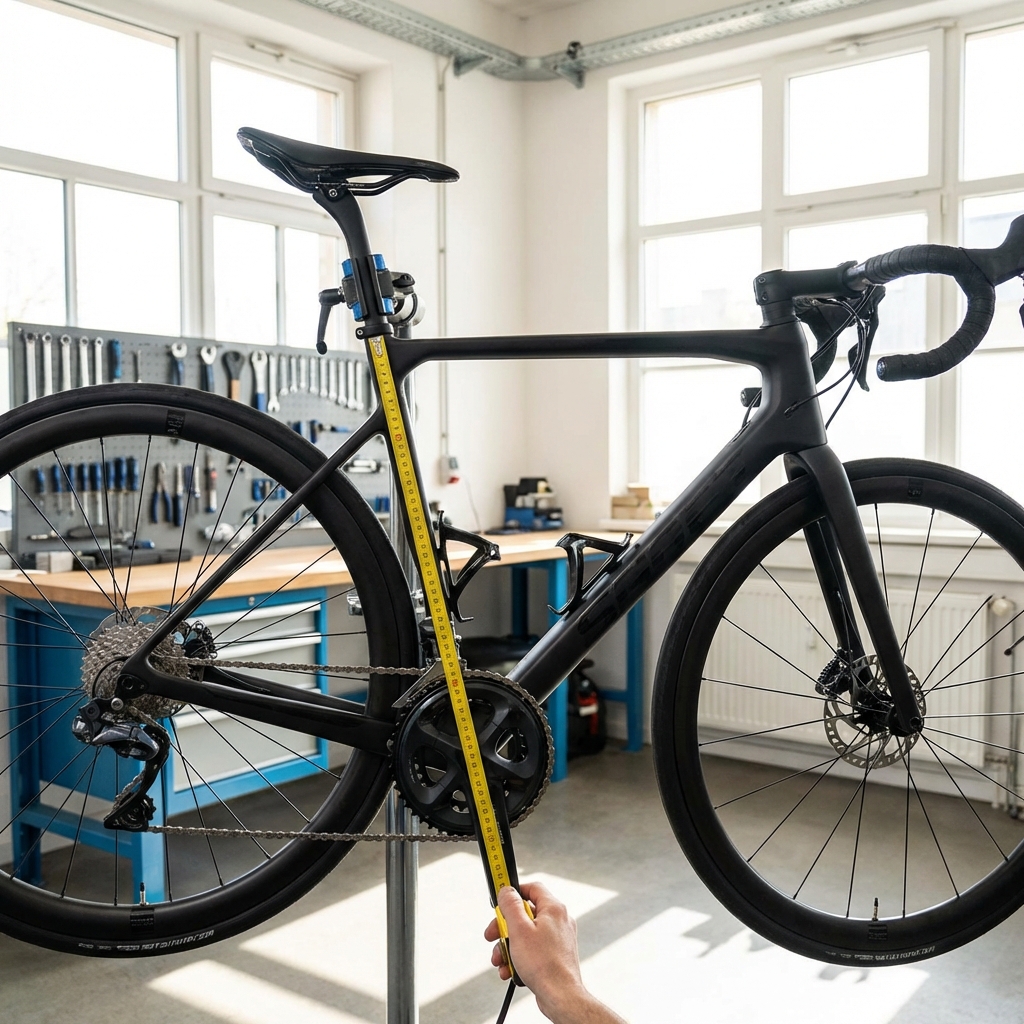
Buying a bike that doesn’t fit is the fastest way to ruin your cycling experience. A frame that’s too large will be hard to handle, while a frame that’s too small will lead to back pain and cramped legs.
The problem? different brands measure their bikes differently, and Mountain Bikes use inches while Road Bikes use centimeters.
In this guide, I’ll show you the industry-standard way to measure a bicycle frame and how to size a bicycle frame for your height, whether you’re buying new or used.
The Most Important Measurement: Seat Tube Length
The “size” of a bike is almost always determined by the length of the Seat Tube. This is the vertical-ish tube that the seatpost slides into.
How to Measure it:
- Locate the Center of the Bottom Bracket: This is the middle of the “circle” that the pedal arms (cranks) spin around.
- Measure Upwards: Run your tape measure along the seat tube to the very top edge (where the seatpost enters the frame).
- The Result:
- If the result is in Centimeters (e.g., 54cm, 56cm), you are looking at a Road Bike.
- If the result is in Inches (e.g., 17”, 19”), you are looking at a Mountain Bike or Hybrid.
Road Bike vs. Mountain Bike Sizing
Bicycles aren’t “one size fits all.” Here is a quick breakdown of how these measurements translate to rider height.
General Sizing Table
| Rider Height | Road Bike Size (cm) | MTB Size (Inches) | T-Shirt Size |
|---|---|---|---|
| 4'11" - 5'3" | 47-49 cm | 13-14" | XS |
| 5'3" - 5'7" | 50-52 cm | 15-16" | S |
| 5'7" - 5'11" | 54-56 cm | 17-18" | M |
| 5'11" - 6'2" | 58-60 cm | 19-21" | L |
| 6'2" + | 61-63 cm | 22"+ | XL |
Modern Measurements: Reach and Stack
If you are looking at modern, high-end bikes, the “Seat Tube Length” isn’t as useful as it used to be because of “sloping” top tubes. Pros now look at Reach and Stack.
- Stack: The vertical distance from the center of the bottom bracket to the top of the head tube (where the handlebars attach). This tells you how high the front of the bike is.
- Reach: The horizontal distance from the bottom bracket to the head tube. This tells you how far “stretched out” you will feel.
Pro Tip: If you are between sizes, go Smaller. It is much easier to make a small bike feel bigger (with a longer seatpost or stem) than it is to make a big bike feel smaller.
How to Find Your Size Without a Bike
If you don’t have a bike to measure yet, use the Inseam Method:
- Stand against a wall in your socks.
- Place a hardcover book between your legs, pulled up into your crotch (mimicking a saddle).
- Have a friend measure from the top of the book down to the floor.
- For a Road Bike: Multiply your inseam (in cm) by 0.67.
- For a Mountain Bike: Multiply your inseam (in cm) by 0.67 and then subtract about 10-12cm.
Bicycle Sizing FAQs
How do you measure bicycle frame size?
Measure the seat tube from the center of the bottom bracket to the top of the seat tube (where the seatpost enters). Road bikes use centimeters (e.g., 54 cm); mountain bikes use inches (e.g., 17 in).
How to size a bicycle frame?
Use your inseam: for road bikes, multiply inseam (cm) by 0.67; for mountain bikes, multiply by 0.67 then subtract 10–12cm. Or use the bike's seat tube measurement and match it to your height using a sizing chart.
Do I measure to the top of the seat or the frame?
Always measure to the top of the frame (seat tube). Do not include the seatpost or the saddle itself, as these are adjustable components and not part of the frame size.
Are Men's and Women's bike sizes the same?
The measurement method is the same, but 'Women's Specific' bikes often have shorter top tubes (shorter reach) to accommodate shorter torsos and longer legs relative to height.
What if my measurement is between two sizes?
Measure your 'Ape Index' (Arm span vs. Height). If your arm span is longer than your height, go for the larger size. If it's shorter, go for the smaller size.