
· Daniel · Repairs · 6 min read
Front Bike Wheel Not Spinning Freely (Solved)
So, you're cruising along on your bike and suddenly you notice something's off - your front wheel isn't spinning as freely as it should be. It's a frustrating situation, but don't worry, we're here to help.

So, you’re cruising along on your bike and suddenly you notice something’s off - your front wheel isn’t spinning as freely as it should be.
It’s a frustrating situation, but don’t worry, we’re here to help.
In this article, we’ll dive into the common causes of a front bike wheel not spinning freely and go over some simple solutions to get you back on the road in no time.
Quick Diagnostic Checklist
Use this checklist to quickly identify the problem:
- Brakes rubbing on rim - Most common cause (60% of cases)
- Dry or damaged bearings - Feels rough when spinning, makes grinding noise
- Fork misalignment - Wheel appears off-center between fork legs
- Bent or broken axle - Wheel wobbles when spinning
- Over-tightened axle nuts - Wheel feels stiff, makes squeaking sound
Quick Test: Lift the front wheel off the ground and spin it. If it stops quickly or feels rough, one of these issues is likely the cause.
Why Is My Bike Front Wheel Not Spinning Freely?
There are a few reasons why your front bike wheel is not spinning freely. Here are the some of the most common ones:
Brakes Rubbing On The Wheel
One of the common causes that can prevent a bike’s front wheel from spinning freely is when the brakes rub against the wheel rim.
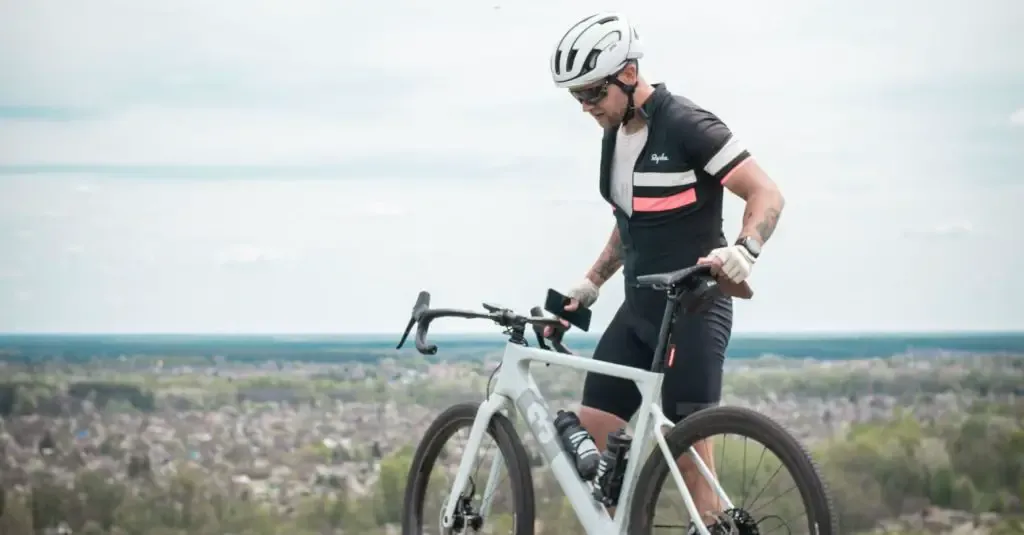
This issue is often encountered in bikes with rim brakes, such as caliper brakes or V-brakes.
When the brakes are adjusted improperly or wear down over time, they can start to make contact with the wheel’s rim, causing unnecessary friction and resistance.
As a result, the wheel may not rotate smoothly, and the cyclist may even experience difficulty in moving the bike forward.
Diagnosing
To see if this is your problem, just give the wheel a spin and watch where the brake pads are.
They should be evenly spaced from the rim, and definitely not touching it when you’re not squeezing the brakes.
If you notice any rubbing action, it’s time to adjust those brakes.
Solution
The good news is that it’s not too hard to adjust this.
You just need to loosen the brake caliper bolts using an allen wrench, wiggle the brake pads into a better position (center it) so they’re not touching the rim and have equal space.
After that tighten those bolts back up.
Bearings Are Dry
Bearings are small, steel balls housed in a race that allows the wheel to rotate around the axle with minimal friction.
The smooth spinning of a bike’s front wheel relies heavily on the quality and condition of the wheel’s bearings.
If the bearings are not adequately lubricated or have become dry over time, they can cause significant resistance and hinder the wheel’s free spinning.
Diagnosing
To check if dry bearings are causing the issue - lift the bike’s front wheel off the ground.
Next, hold the wheel by the axle and attempt to spin it.
If you feel any roughness or hear grinding or ticking sounds while spinning, it’s a clear sign that the bearings need attention.
Solution
To address dry bearings, disassemble the wheel hub carefully. Clean the old, dry grease and debris from the bearing components using a suitable solvent.
Once clean, apply fresh, high-quality bicycle bearing grease to the bearings and races.
Reassemble the wheel hub, ensuring all parts are correctly seated and secured.
Now, the bearings should be well-lubricated, allowing the front wheel to spin freely and smoothly.
Fork Misalignment
Fork misalignment is when the two fork legs of your bike are not lined up properly.
This can happen if you crash, have a rough impact, handle your bike improperly during transportation, or even due to manufacturing defects.
When the forks aren’t aligned right, they end up putting pressure on the wheel hub, making the front wheel not spin as freely as it should.
Diagnosing
To check if this is the case, stand in front of the bike and look down the fork legs while focusing on the wheel.
The wheel should appear centered between the forks, with equal gaps on both sides.
If there is an obvious asymmetry or the wheel seems off-center, that’s a telltale sign of a misalignment issue.
Solution
Now, here’s the important part - don’t try to fix this on your own! Leave it to the pros.
Fixing fork misalignment requires the skills of a bike mechanic or a qualified technician.
Attempting to correct the alignment without proper tools or expertise can potentially worsen the problem or compromise the bike’s safety.
Bent or Broken Axle
A bent or broken axle can also be the reason.
It can create a misalignment between the hub’s bearings and the fork dropouts which increases friction and resistance when the wheel rotates, preventing it from spinning freely.
If it’s broken, the front wheel can become completely detached from the bike’s fork, leading to a dangerous situation while riding.
Diagnosing
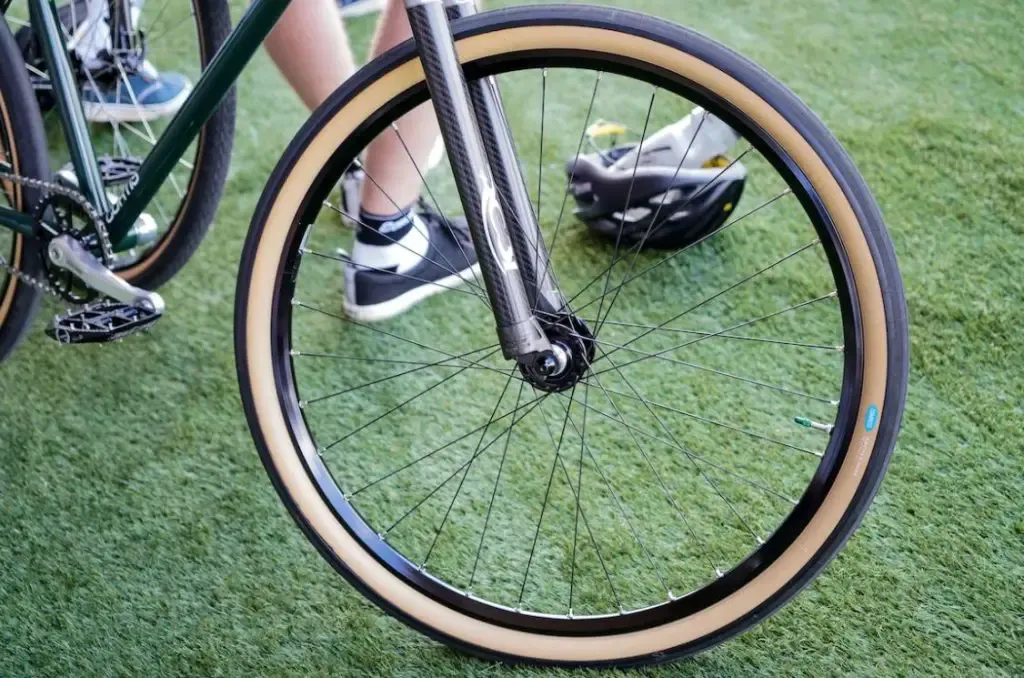
Lift the bike off the ground, so the front wheel is not touching the floor and give the front wheel a spin with your hand.
If the wheel wobbles or looks crooked when spinning, the axle might be bent.
Also, check the axle for any visible bends or cracks.
Solution
In most cases, repairing a bent axle is not feasible due to the stresses it undergoes during use. The best thing you can do in this case is to replace it entirely.
You might need professional help to properly disassemble the wheel hub and replace it.
Tight Axle Nuts
Another common reason behind the issue is the axle nuts are too tight.
If they are too tight, they squeeze the wheel’s bearings too much, causing friction which makes it difficult for the wheel to spin smoothly.
It’s like trying to ride a bike with the brakes slightly on.
Diagnosing
Lift the bike off the ground and give the wheel a spin.
If you hear a squeaky sound - it usually means the axle nut is too tight.
Solution
If this is the case, you need to loosen the axle nuts with a wrench, until you get the right torque.
The front wheel should have a little bit of play or side-to-side movement (not too loose or too tight) when the nuts are correctly adjusted.
Cost Estimates: DIY vs Professional Repair
DIY Repair Costs
| Issue | Parts Needed | Cost | Time Required | Difficulty |
|---|---|---|---|---|
| Brake Adjustment | None | $0 | 5-10 minutes | Easy |
| Bearing Lubrication | Grease | $5-10 | 30-45 minutes | Moderate |
| Axle Nut Adjustment | None | $0 | 5 minutes | Easy |
| Axle Replacement | New axle | $15-30 | 45-60 minutes | Moderate-Difficult |
Total DIY Cost Range: $0-40 depending on the issue
Professional Repair Costs
| Service | Typical Cost | Time Required |
|---|---|---|
| Brake Adjustment | $15-25 | 10-15 minutes |
| Bearing Service | $40-60 | 30-45 minutes |
| Axle Replacement | $50-80 (parts + labor) | 30-45 minutes |
| Fork Alignment | $60-100 | 45-60 minutes |
| Full Wheel Service | $80-120 | 1-2 hours |
When to DIY: Brake adjustments, axle nut tightening, basic bearing lubrication When to Go Pro: Fork misalignment, complex bearing replacement, lack of tools/experience
When to Seek Professional Help
DIY If:
- Brakes are just rubbing (simple adjustment)
- Axle nuts are too tight (easy fix)
- You’re comfortable with basic bike maintenance
- You have basic tools (Allen keys, wrench)
Seek Professional Help If:
- Fork appears misaligned (requires special tools)
- Bearings are severely damaged or seized
- Axle is bent or broken
- You’re not comfortable with bike mechanics
- The problem persists after DIY attempts
- You don’t have the necessary tools
Safety Note: If the wheel won’t spin at all or makes loud grinding noises, stop riding immediately and have it checked by a professional to avoid accidents.
Bottom Line
Brakes rubbing on the wheel, dry bearings, misaligned forks, bent or broken axles, and overly tightened axle nuts are among the most common culprits behind why your front bike wheel won’t spin freely.
Most of these are easy to fix at home, but some may need a mechanic’s attention.
Frequently Asked Questions
Bike Rear Wheel Not Spinning Freely
Your bike rear wheel will not spin freely for the same reasons. Check the brakes, axles and bearings and see if there's anything wrong with them.
Should Bike Wheels Spin Freely?
Yes, bike wheels should spin freely. Smooth and unobstructed wheel rotation is a must for an enjoyable and safe bike ride.
How do I know if my wheel bearings are bad?
Bad wheel bearings will feel rough or gritty when you spin the wheel, make grinding or clicking noises, and the wheel may have play (side-to-side movement). If you lift the wheel and spin it, it should spin smoothly and quietly. Any roughness or noise indicates bearing problems.
Can I ride with a wheel that doesn't spin freely?
You can ride with a wheel that doesn't spin freely, but it will be inefficient and may cause premature wear. However, if the wheel is completely stuck or makes loud grinding noises, stop riding immediately as this indicates serious damage that could lead to wheel failure.
How much does it cost to fix a wheel that won't spin?
DIY fixes cost $0-40 depending on the issue: brake adjustments are free, bearing lubrication costs $5-10, and axle replacement costs $15-30. Professional repairs cost $15-120: simple adjustments ($15-25), bearing service ($40-60), or full wheel service ($80-120).
Why does my front wheel stop spinning immediately?
If your front wheel stops spinning immediately after you let go, the most common causes are: brakes rubbing on the rim (most likely), over-tightened axle nuts, or severely damaged bearings. Check the brakes first as this is the easiest fix.
How tight should front wheel axle nuts be?
Front wheel axle nuts should be tight enough to prevent play (side-to-side movement) but loose enough to allow smooth spinning. There should be a slight amount of play when you wiggle the wheel side-to-side. If the wheel feels stiff or makes squeaking sounds, the nuts are too tight.
Can misaligned forks cause wheel spinning issues?
Yes, misaligned forks can cause the wheel to not spin freely. If the fork legs are not parallel, they put uneven pressure on the wheel hub, creating friction. This requires professional repair as fork alignment needs special tools and expertise to fix properly.